
Waste in the Sea (Present Continuous)
EXERCÍCIOS
Moabe Andrade
3/23/20262 min read
Waste in the Sea (Present Continuous)
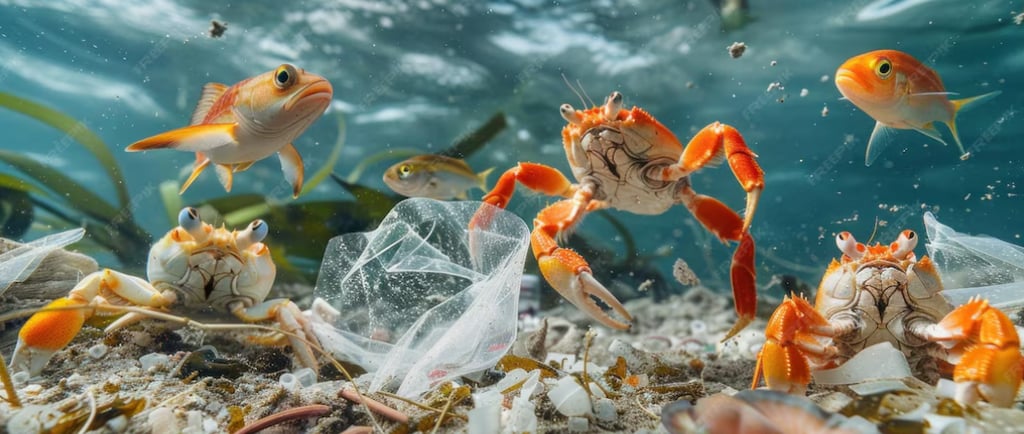
The ocean is facing a serious environmental crisis, and the situation is getting worse every year. Right now, millions of tons of waste are entering the sea, and people around the world are becoming more aware of the problem.
Every day, individuals are throwing plastic bottles, bags, and other materials into rivers and oceans. As a result, large areas of the sea are turning into polluted zones. In some regions, massive amounts of trash are floating on the surface, and they are growing larger over time.
Marine animals are suffering because of this pollution. Turtles are eating plastic bags because they look like jellyfish. Fish are swimming in contaminated water, and many species are dying slowly. Birds are getting trapped in waste, and they are struggling to survive.
At the same time, scientists are studying the problem and are trying to understand its impact. They are developing new technologies and are searching for effective solutions. Governments are creating laws, but some countries are not enforcing them properly.
Meanwhile, environmental groups are working to reduce pollution. Volunteers are cleaning beaches, and communities are organizing environmental actions. More people are changing their habits and are using less plastic in their daily lives.
Even so, the problem is not disappearing. Waste is still spreading, and the ocean is continuing to suffer. The question remains: are we doing enough, or are we making the situation worse?
Vocabulário em contexto
Waste is entering the ocean every day.
O lixo está entrando no oceano todos os dias.
Plastic is floating on the surface.
O plástico está flutuando na superfície.
Animals are suffering because of pollution.
Os animais estão sofrendo por causa da poluição.
People are changing their habits.
As pessoas estão mudando seus hábitos.
Scientists are developing solutions.
Os cientistas estão desenvolvendo soluções.
Explicação – Present Continuous
O present continuous é usado para ações que estão acontecendo agora ou em progresso.
Estrutura:
Subject + am / is / are + verbo + ing
Exemplos do texto:
The ocean is facing a crisis
People are throwing plastic
Animals are suffering
Perguntas de compreensão
Responda em inglês:
What is happening to the ocean right now?
What are people throwing into the sea?
Why are marine animals suffering?
What are scientists doing to solve the problem?
What are people doing to reduce pollution?
Exercício
Complete com present continuous:
a) People __________ (throw) waste into the ocean.
b) Scientists __________ (study) the problem.
c) Animals __________ (suffer) because of pollution.
d) Volunteers __________ (clean) the beaches.
Prática de fluência
Frase base:
People are throwing plastic into the sea.
Crie variações:
People are polluting the ocean.
People are using too much plastic.
People are damaging the environment.
People are not protecting the sea.
Repita em voz alta por dois dias e tente falar sozinho explicando o problema. Isso ajuda a desenvolver fluência de forma prática.